The Cold-Weather Climb: Reading Your Blood Pressure Properly This Winter
November in Haydon Bridge has a way of making itself known. The first proper frost settles on the fell, the wind comes down the South Tyne valley, and suddenly the kitchen feels like the coldest room in the house. For anyone who checks their blood pressure at home, this is also the season when the numbers can start to look a little different.
That is not necessarily a sign that something has gone wrong. Blood pressure often runs a bit higher in winter than in summer, and a cold room, a rushed morning and a monitor that has not been used since August can all nudge a reading upwards. The useful question is not “why is it different?” but “is this reading telling me something I can trust?”
Why winter can push the numbers up
When you get cold, the small blood vessels near the surface of your skin narrow to help keep heat in. That is a sensible survival trick, but it means your heart is pushing blood through a tighter network of pipes, so the pressure can rise. For many people the change is modest — a few points on the top or bottom number — but it can be enough to make a home record look unfamiliar.
There are other winter factors too. We tend to be less active, eat more warming comfort food, and perhaps enjoy a few more salty meals and hot drinks. Some people find their routine changes: less walking into Hexham, more time indoors, maybe a chest infection or a cold that leaves them feeling below par. None of these things automatically means your medicine is wrong, but they are worth noticing.
A home reading you can trust
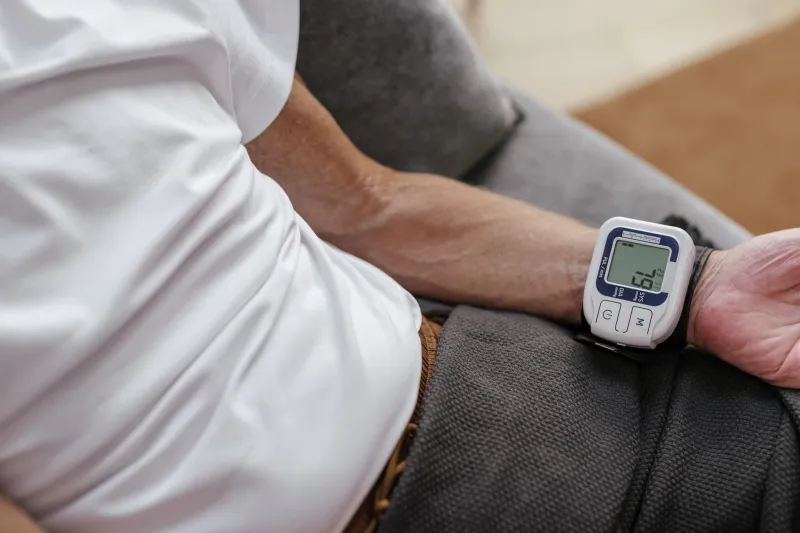
If you are going to check your blood pressure at home, the aim is to make the conditions as boring and repeatable as possible. Use an upper-arm monitor with a validated cuff, and make sure the cuff is the right size for your arm. A wrist monitor can be convenient, but upper-arm machines are generally preferred for home monitoring.
Before you sit down, empty your bladder and avoid caffeine, smoking or exercise for about half an hour. Sit for five minutes in a quiet room with your back supported, feet flat on the floor and legs uncrossed. Rest your arm on a table so the cuff is at about heart level. Put the cuff on bare skin, not over a thick sleeve, and keep still while it inflates.
Take two readings, about a minute apart, and write both down. Do this morning and evening for a week if you have been asked to monitor, or simply follow the advice you have been given. One reading on its own is rarely the full story. A pattern over several days is much more useful than a single alarming number after a cold walk back from the shops.
What to record — and what not to do
Keep a simple note of the date, time, top and bottom numbers, and anything unusual: a missed dose, a bad night’s sleep, a cold, or a stressful morning. Bring that record with you when you speak to a clinician. It is far more helpful than trying to remember a handful of numbers from memory.
What not to do is adjust your medicines yourself because a winter reading looks higher. Blood pressure medicines are prescribed for you, and changing the dose without advice can cause problems. If your readings are consistently higher than usual, or you feel unwell, ask for a review rather than tinkering with the blister pack.
Warmth, medicine and the village routine
Keeping warm is part of blood pressure care in winter. A cold house makes your body work harder, so aim to heat the rooms you use most and wear layers rather than relying on one hot blast in the evening. If the weather is grim, a short indoor walk or a few laps of the stairs can still help you stay active without braving the bridge in the sleet.
It is also worth checking your medicine routine. Are you still taking your tablets at the same time each day? Have you run out of anything? Has a repeat prescription crept up on you? These sound like small things, but they matter more when the days are short and the diary is full.
When to bring it to us
If your home readings are persistently higher than usual, or you are getting readings that seem very up and down, bring your monitor, your cuff and your medicine list to Haydon Bridge Pharmacy. We can check your technique, make sure the cuff fits properly, and talk through what you are seeing. We cannot diagnose or change your prescription on the spot, but we can help you get a clearer picture and point you towards the right next step.
Seek urgent help if a very high reading comes with chest pain, severe headache, breathlessness, weakness or numbness, confusion, or changes in vision. If you are worried and unsure, contact NHS 111 or your GP. For emergencies, call 999.
The bottom line
A colder season can mean slightly different blood pressure numbers, and that is often normal. The key is to measure carefully, record honestly, keep warm, take your medicines as prescribed, and ask for a review if something does not look right. As we head through the back end of 2026, a few calm minutes with your monitor — and a chat with your local pharmacy — can be a genuinely useful part of your winter routine.