Breathing Easy When the Frost Moves In: A Practical Inhaler Winter Kit for Haydon Bridge
There is a particular kind of Haydon Bridge morning in winter. The pavements are gritted, the air has that clean, cutting edge to it, and you can see your breath before you have even reached the end of the street. For most people, that is just a sign to zip up a bit higher. For anyone living with asthma or COPD, it can be the moment the chest starts to feel tighter than it did indoors.
That is not imagination, and it is not something to shrug off. Cold, dry air can irritate the airways, and moving suddenly from a warm living room into a frosty morning is a classic trigger. The good news is that a little preparation goes a long way. Think of it less as a medical lecture and more as a winter kit: the same way you would check a torch and a scraper, you can check your inhalers, your technique and your plan.
Why cold air catches your breath
When you breathe in very cold air, your airways can narrow in response. Add in a sudden change in temperature — leaving a warm house, stepping off a bus, walking into a chilly wind — and the body has to adjust quickly. For someone with sensitive airways, that adjustment can bring on coughing, wheezing, a tight chest or shortness of breath.
Winter also brings more of the usual suspects: colds, flu, chest infections and drier indoor air from heating. All of these can make breathing symptoms harder to manage. That is why the colder months are a sensible time to look at your inhalers properly, rather than waiting until you are already struggling.
The thirty-second technique check
Most of us were shown how to use an inhaler once, possibly years ago, and have been doing our own version ever since. It is worth a quick reset.
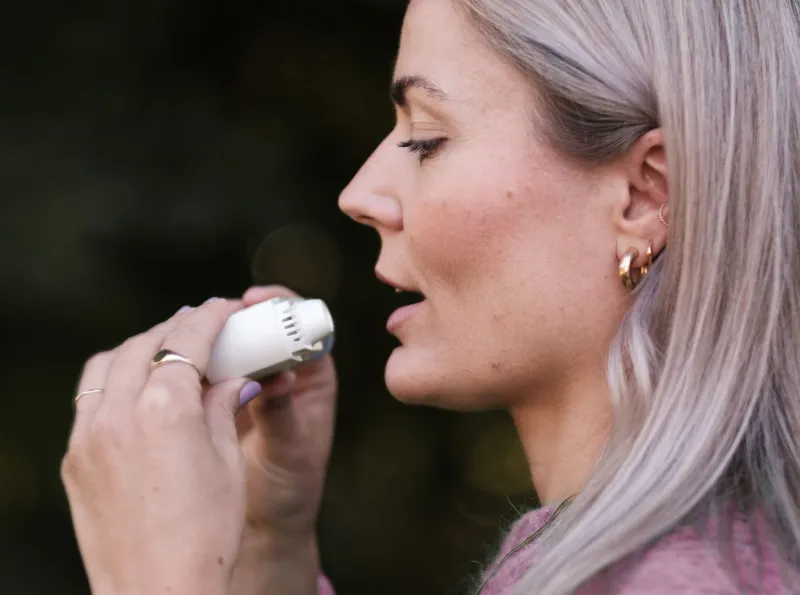
For a standard metered-dose inhaler, the usual routine is: shake the inhaler, breathe out gently, seal your lips around the mouthpiece, press the canister as you start to breathe in slowly and deeply, then hold your breath for about ten seconds before breathing out. If you use a spacer, the steps are slightly different and often easier — more on that below.
A few common slip-ups we see:
- Pressing the inhaler before breathing in, so the medicine lands on the tongue rather than in the airways.
- Breathing in too fast, especially with a spacer, which can reduce how much medicine gets where it needs to go.
- Not shaking the inhaler first, particularly with combination inhalers.
- Forgetting to rinse your mouth after certain inhalers, which can lead to a sore mouth or throat.
If you are not sure whether your technique is still up to scratch, bring your inhaler into the pharmacy. We can watch you use it and offer a few gentle pointers. No judgement, no fuss.
Spacers: not just for children
Spacers are often associated with children, but they are genuinely useful for plenty of adults too. A spacer helps you breathe the medicine in more steadily, and it can reduce the amount that ends up in your mouth and throat rather than your lungs. If you struggle to coordinate pressing and breathing at the same time, a spacer can make a real difference.
They need a bit of care, though. Wash them in warm soapy water according to the instructions and let them air dry rather than rubbing them with a towel, which can create static. Replace them when they get cracked or cloudy. If yours has been rattling around the bottom of a bag since last winter, it might be time for a fresh one.
Where to keep your inhaler when it is freezing
Inhalers are not keen on extreme temperatures. Leaving one in a cold car overnight or on a windowsill in a frost is not ideal. Most manufacturers advise storing inhalers at room temperature, away from direct heat and freezing conditions. Your kitchen cupboard or bedroom drawer is usually a safer bet than the glovebox.
It is also worth keeping a spare reliever inhaler in a sensible place — not locked away somewhere so safe that you cannot find it when you are breathless. If you have a written asthma action plan, keep it with your medicines so anyone in the house can find it.
Build a small winter breathing kit
You do not need a huge amount of kit. A little organisation is the main thing:
- Your reliever inhaler, in date and not empty. Check the dose counter if it has one.
- Your preventer inhaler, taken regularly as prescribed — even when you feel fine.
- A clean spacer if you use one.
- Your asthma action plan or COPD plan, if you have one.
- A note of your usual pharmacy and any allergies or medicines, in case someone else needs to help.
It is also worth checking expiry dates and whether you have enough of everything to get through a cold snap. Running out during a busy week is far more stressful than ordering a repeat a few days early.
When to ask for help rather than wait
Mild tightness that settles with your usual reliever inhaler is one thing. But some signs need more urgent attention. Call 999 if you are struggling to breathe, cannot speak in full sentences, feel exhausted or drowsy, have blue lips or fingers, or your reliever inhaler is not helping.
Contact NHS 111 or your GP urgently if your symptoms are getting worse, you are needing your reliever inhaler more often than usual, or you have a chest infection that is not improving. If you are unsure, you can always ring us and we will point you in the right direction — though we will never delay you from seeking urgent help if you need it.
What we can do at the pharmacy
We are not here to replace your GP or asthma nurse, but we can help with the practical bits. We can check your inhaler technique, talk through spacers, help you understand your prescription, and advise on winter vaccinations. If you are eligible for a flu or COVID-19 vaccination this winter, we can tell you what is available and when.
If your inhalers are due for review, or you have questions about storing them in cold weather, pop in. Haydon Bridge is a small place, and we would rather see you for a five-minute chat in November than have you struggling in January. Cold air does not have to catch you out.